
Inside the Room: Recording Immersive Audio with DPA & Dolby Atmos
Inside THIS IS RED’s collaboration with DPA, recording musicians throughout our Pittsburgh studio and exploring how microphones, architecture and immersive audio can make the room part of the performance.
A great recording captures the musician. An immersive recording can capture the world around them. That idea has been at the center of two collaborations between THIS IS RED and DPA Microphones inside our Pittsburgh production studio, a 20,000-square-foot former cathedral built a century ago.
The first was a dedicated recording and video shoot. We brought live musicians into the building and used the architecture, DPA microphones and immersive recording techniques to capture not only the performances, but the space surrounding them.
The second expanded that experiment into an Immersive Audio Masterclass presented at THIS IS RED with DPA, Vintage King and Antelope Audio. The event explored Dolby Atmos, spatial audio and immersive recording through demonstrations, discussion and live recording inside the cathedral. Vintage King promoted the October 30 masterclass specifically as an opportunity to get hands-on with spatial audio and Dolby Atmos technology at THIS IS RED.
Together, the two events explored a question we keep coming back to: What happens when the room becomes part of the performance?
RECORDING THE CATHEDRAL
THIS IS RED occupies the former St. Michael's church in Pittsburgh. The building was created for voices and music long before anyone was talking about multichannel recording, spatial audio or Dolby Atmos. Today, those acoustics give us an unusual environment for recording. For the original DPA session, musicians performed throughout the space while we captured both traditional close-miked perspectives and the natural sound of the building. The objective was not to remove the room from the recording. It was to preserve it. Move a microphone closer to a musician and you hear intimacy, articulation and detail. Move another farther into the sanctuary and the relationship changes. Reflections arrive later. Reverb becomes more pronounced. The scale of the architecture begins to make itself heard. Instead of adding a simulated room after the fact, we could record the actual one.
DPA'S IMMERSIVE MICROPHONE ARRAY
One of the most interesting tools we explored was DPA's approach to immersive microphone arrays. An immersive array uses multiple microphones arranged spatially to capture more than a conventional left-to-right stereo image. DPA offers several configurations for surround and immersive recording, including matched microphone arrays and the compact 5100 Mobile Surround Microphone. What makes that particularly interesting inside a cathedral is its ability to capture the acoustic environment as a coherent surround image.
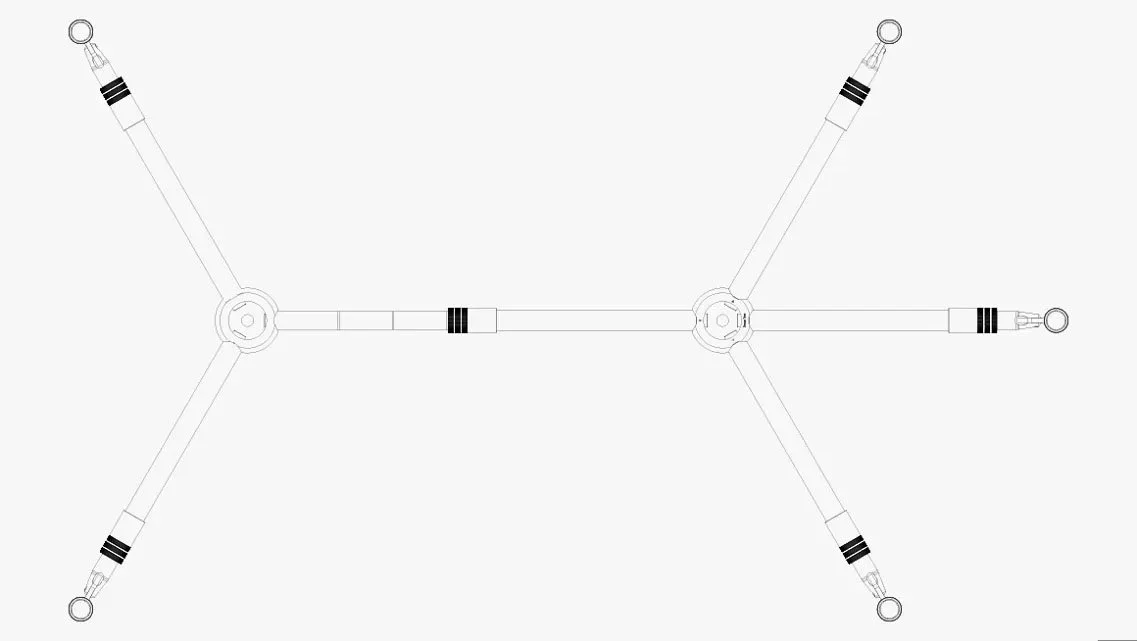
In our space, that means the microphone isn't simply listening to the musicians. It's listening to the building.
MICROPHONE PLACEMENT BECOMES STORYTELLING
For THIS IS RED, there's an obvious connection between immersive recording and the way we approach film and animation. Where you put a microphone isn't that different from where you put a camera. Move the camera and you change the audience's perspective. Move the microphone and you change the listener's. A microphone close to the instrument says one thing. A microphone positioned farther into the cathedral says something completely different. Combine those perspectives and suddenly you're not simply documenting a performance. You're beginning to describe the physical world around it.
That's especially important in immersive audio. DPA notes that immersive recording can involve both conventional surround arrays and configurations that add height information, creating additional cues about the three-dimensional environment in which the recording took place. The room becomes part of the composition.
A second event took that idea much further. THIS IS RED hosted an Immersive Audio Masterclass with DPA Microphones, Vintage King and Antelope Audio, bringing recording professionals, musicians and audio enthusiasts into the building for an evening devoted to immersive recording and Dolby Atmos.
This wasn't simply a presentation about spatial audio. We recorded live musicians. DPA's immersive microphone technology allowed attendees to explore how an actual performance could be captured spatially at the source, rather than thinking of immersive audio as something that happens only later during the mix. That distinction is important. Immersive audio can begin with the room. It can begin with the microphone. It can begin before anyone presses record.
FROM THE MICROPHONE TO DOLBY ATMOS
Capturing an immersive performance is only half of the equation. Inside THIS IS RED, we also have a dedicated Dolby Atmos theater and mixing environment, which gives us the ability to move from recording a three-dimensional acoustic space to experiencing the resulting work in an immersive playback environment. That creates an interesting journey.
Traditional stereo can create an extraordinary left-to-right image. Dolby Atmos gives us a much larger spatial canvas in which the direct performance and the acoustic environment can coexist around the listener. And the goal isn't to make everything fly around the room. It's to make the room feel like a room.
The reflections captured farther into the cathedral can help communicate distance. Ambient microphones can reveal the size of the space. Height and reverberation can contribute to the sensation that you're listening from somewhere inside the architecture rather than simply hearing a recording presented in front of you. DPA's own work in immersive recording emphasizes the importance of capturing the venue itself as a three-dimensional space, rather than treating immersive sound solely as a collection of sources that are positioned later. That's a philosophy that makes particular sense here.
A DOLBY ATMOS THEATER INSIDE A 100-YEAR-OLD CHURCH
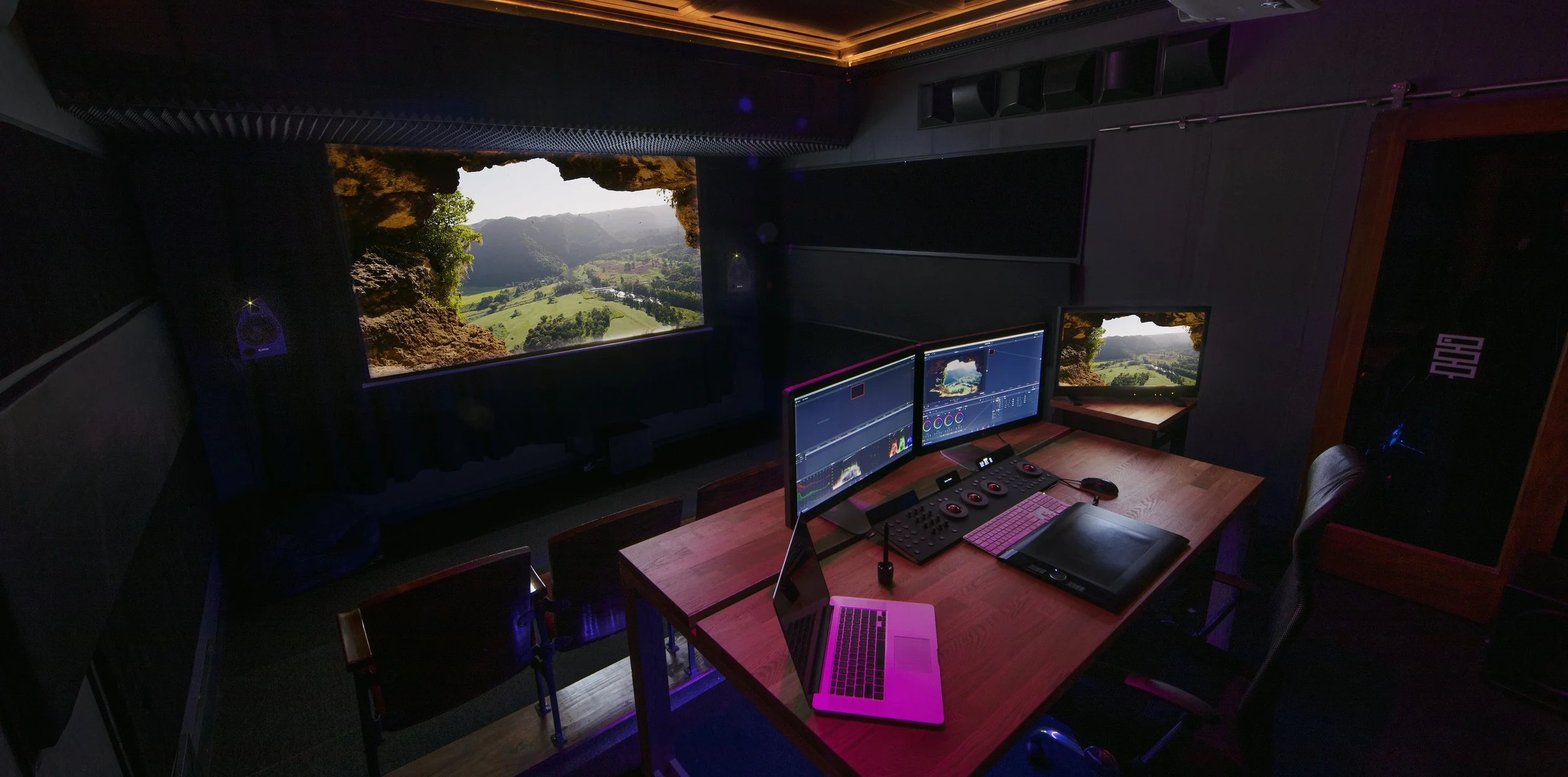
There's something wonderfully strange about recording musicians inside the sanctuary of a century-old church and then walking into a Dolby Atmos theater inside the same building to experience sound spatially. But that collision of old and new is a big part of THIS IS RED. Our Pittsburgh studio brings animation, film production, photography, music, recording, sound design and immersive production together under one roof. The Dolby Atmos theater isn't simply a screening room. It's part of our production environment, giving us a place to create, mix, review and experience immersive work.
Our relationship with Dolby has shaped how we think about immersive storytelling for years. The sessions with DPA, and later the Immersive Audio Masterclass with DPA, Vintage King and Antelope Audio, allowed us to explore the same idea from another direction:
What if immersive storytelling starts at the microphone?
SOUND, SPACE AND THE PERFORMANCE
Immersive audio is often discussed as a post-production format. These sessions demonstrated why we think it can be more interesting than that. It begins with the performer. It begins with the room. It begins with deciding where the listener should be standing. And it begins with choosing microphones and arrays capable of preserving the spatial relationships that make a performance feel like it happened somewhere. For an animation studio and film production company, that's an important distinction. We're interested in immersive audio for the same reason we're interested in cinematography, animation, production design and visual effects. They're all ways of building a world around an audience. Sometimes we build that world from pixels. Sometimes we build it with cameras. And sometimes the world is already there. You just have to put the microphones in the right place. The musicians played the instruments.
We recorded the cathedral too.